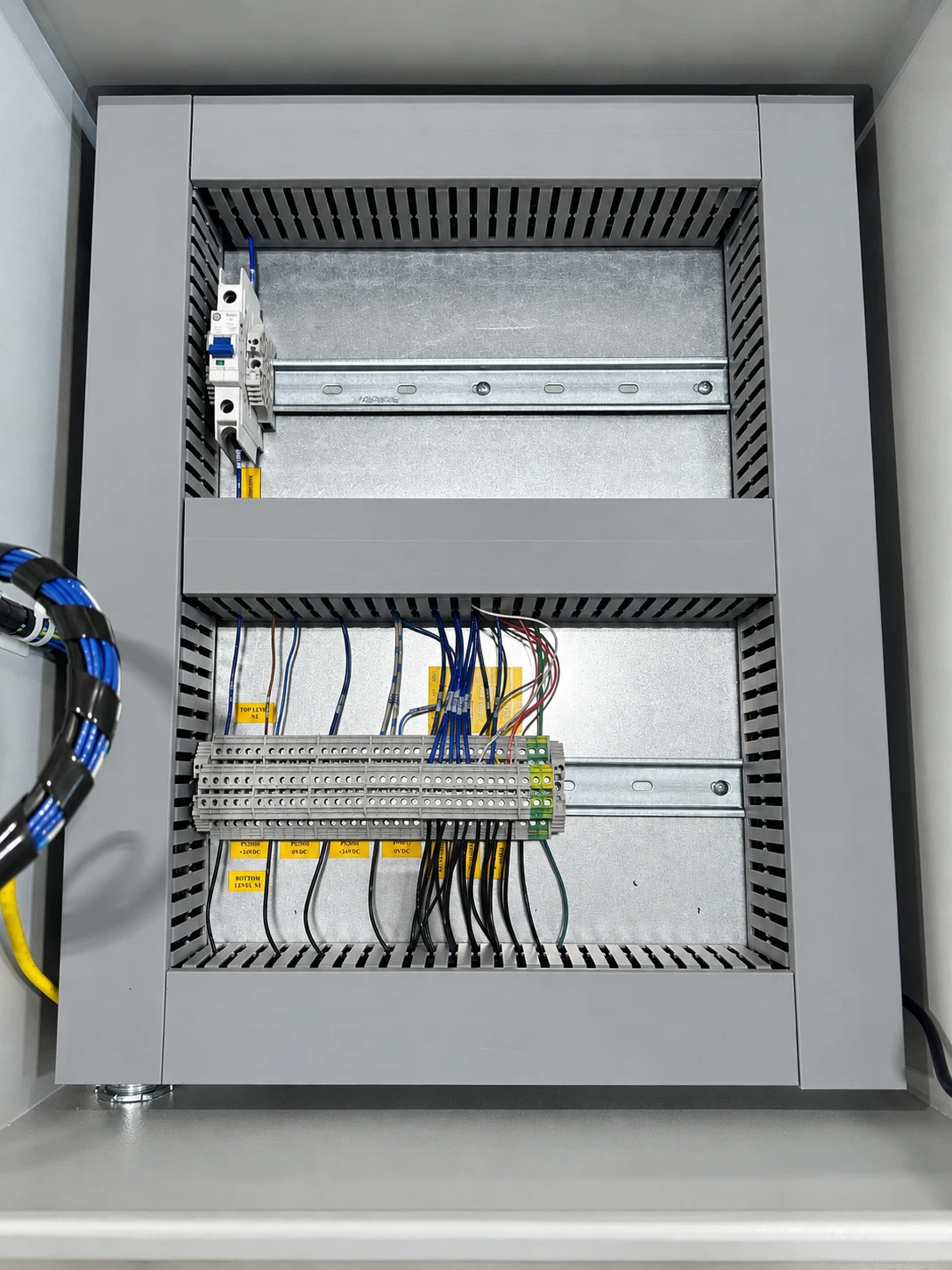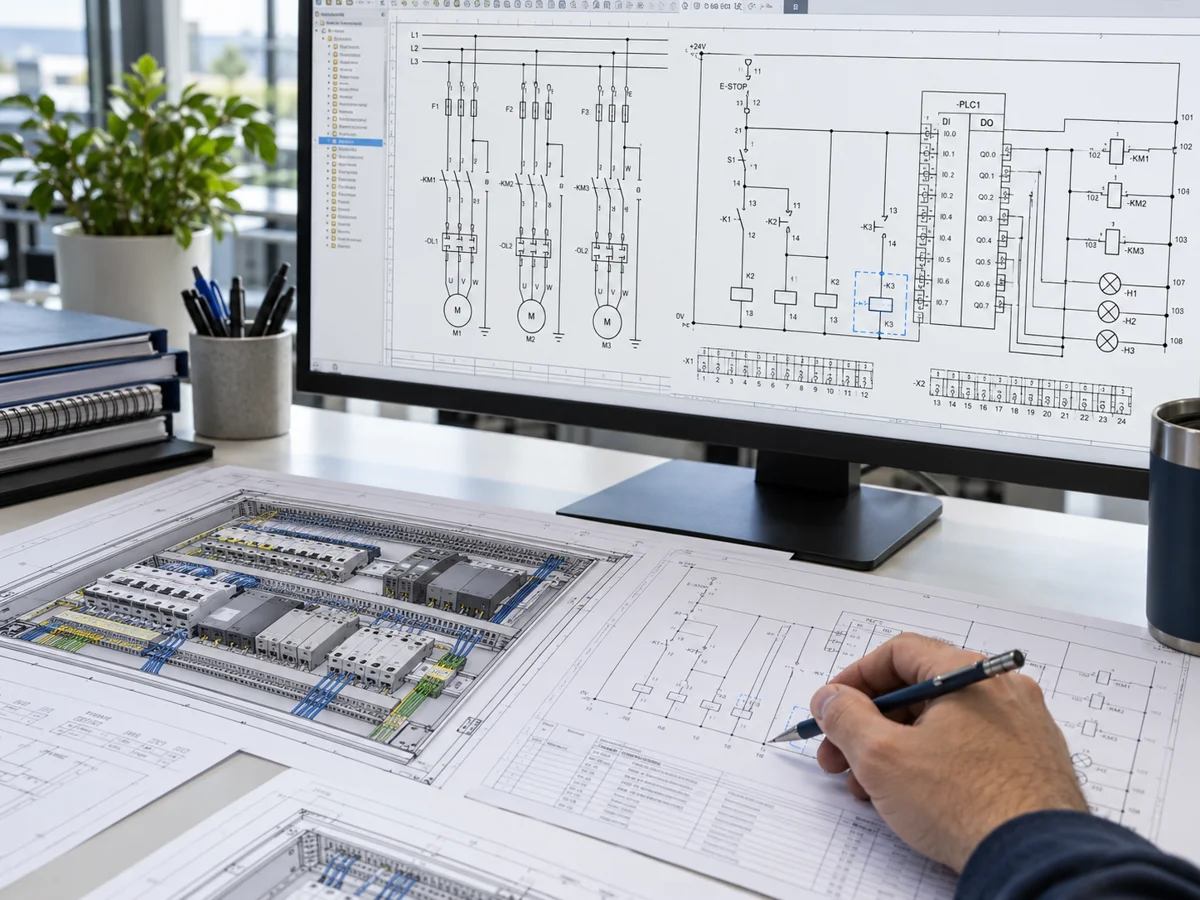
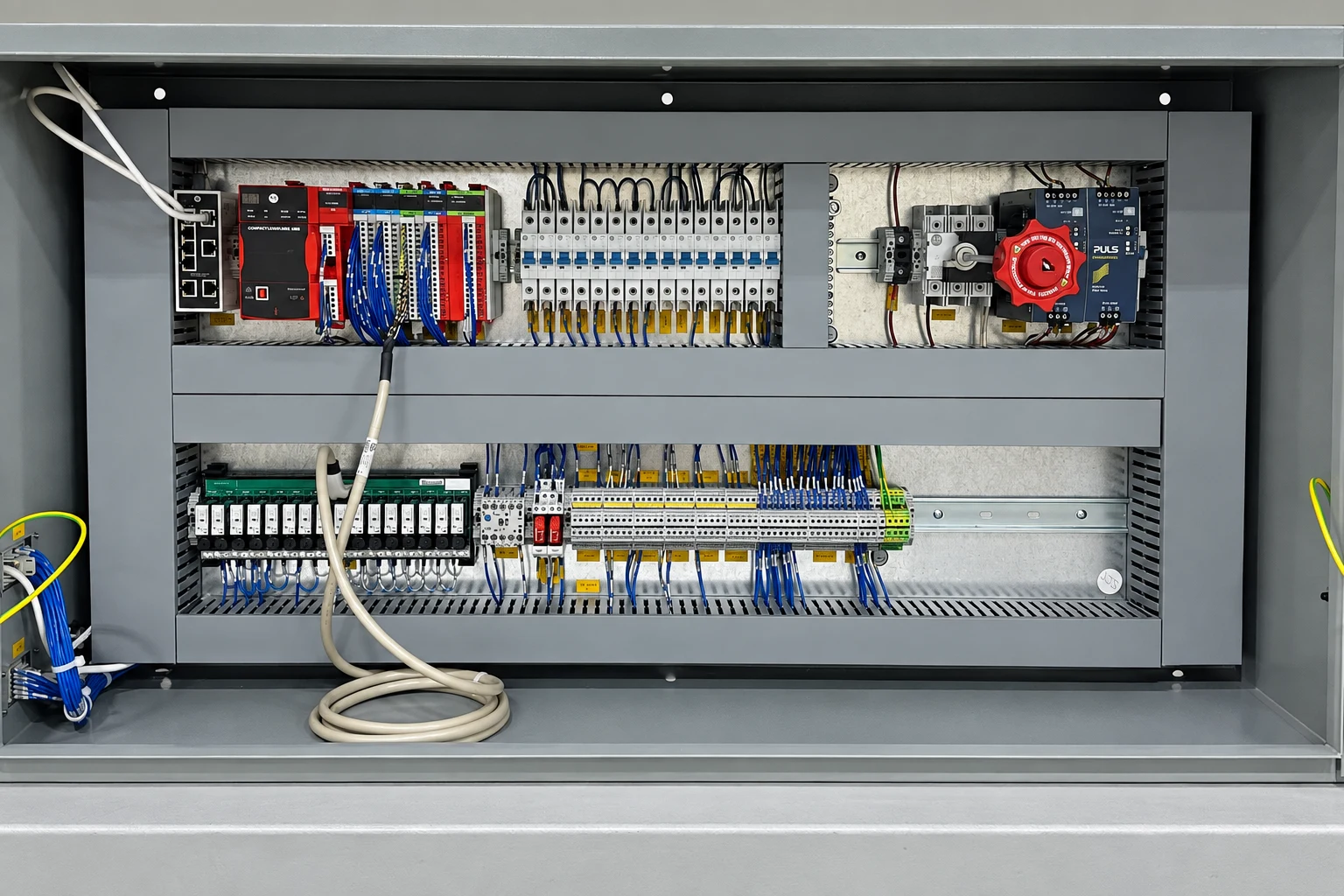
A purchase request that says “UL panel required” leaves several decisions open. Which equipment is covered? Where will the panel be installed? What supply and fault-current information is available? Those answers affect the design long before a label is applied.
Start with a specification that separates the panel, the controlled equipment, and the site installation. That gives purchasing, engineering, and the panel supplier a common basis for the quote.
Define what the label must cover
UL Solutions explains that certification of an enclosed industrial control panel covers the panel itself, not the loads or equipment it controls. A labeled panel therefore does not, by itself, establish certification of the complete machine or its field installation. See UL’s explanation of panel certification scope.
State the destination country, installation location, requested certification marking, and any end-user specification. Do not treat a U.S. requirement as an automatic answer for a Canadian installation. Ask the supplier to identify the applicable marking and deliverables in the proposal.
Give the electrical designer usable site information
The incoming voltage is only part of the brief. Supply configuration, frequency, load data, and the available fault current at the installation point need owners. If site information is missing, mark it as pending and agree when it must be resolved.
| Input | What to provide | Why it affects the panel |
|---|---|---|
| Incoming supply | Voltage, phase, frequency, supply configuration | Component selection and circuit design |
| Fault-current conditions | Available fault current and required SCCR, with the responsible reviewer | Suitability for the intended installation |
| Connected loads | Motor, drive, heater, and auxiliary-load schedules | Power distribution and protection |
| Environment | Indoor/outdoor location, ambient temperature, contaminants, washdown conditions | Enclosure and thermal design |
| Plant standards | Approved brands, wire identification, network and documentation requirements | Consistency with the receiving facility |
Do not confuse operating current with SCCR
A panel’s normal current rating and its short-circuit current rating describe different conditions. SCCR concerns the assembly’s capability under specified short-circuit conditions; it is not simply the amperage printed on the main disconnect.
UL identifies Supplement SB of UL 508A as an accepted method for determining a panel SCCR. Component combinations and their conditions of use matter, so avoid specifying a target without checking the design basis. UL’s SCCR guidance is a useful starting reference; the project’s qualified electrical personnel must establish the actual requirement.
Separate build, programming, and installation scope
Consider an illustrative request for one conveyor control panel. The supplier may include enclosure assembly and internal wiring while the customer expects field cable installation, PLC software, and a production run at the plant. Both parties can believe they have agreed to “a complete panel.”
Write separate scope lines for electrical design, assembly, PLC/HMI programming, factory testing, field wiring, and commissioning. Identify who supplies field devices, who approves the drawings, and who verifies the installation interfaces. List spare capacity requirements explicitly rather than asking for unspecified “room for future expansion.”
Agree on the release package
Before placing the order, ask for the proposed drawing set, bill of materials, labeling scope, inspection and test records, and revision status at shipment. Define how substitutions are approved. A change in a protective device or power component deserves an engineering review, even if its normal operating rating looks similar.
A useful final review asks three questions: Does the delivered assembly match the approved documents? Are open issues assigned? Is the receiving team clear about what still needs to be installed and verified on site? Those questions turn a certification requirement into a manageable project scope.
Spinula can supply control panels with UL 508A labeling. The marking, testing, and documentation requirements are confirmed for the specific panel in the proposal.