01
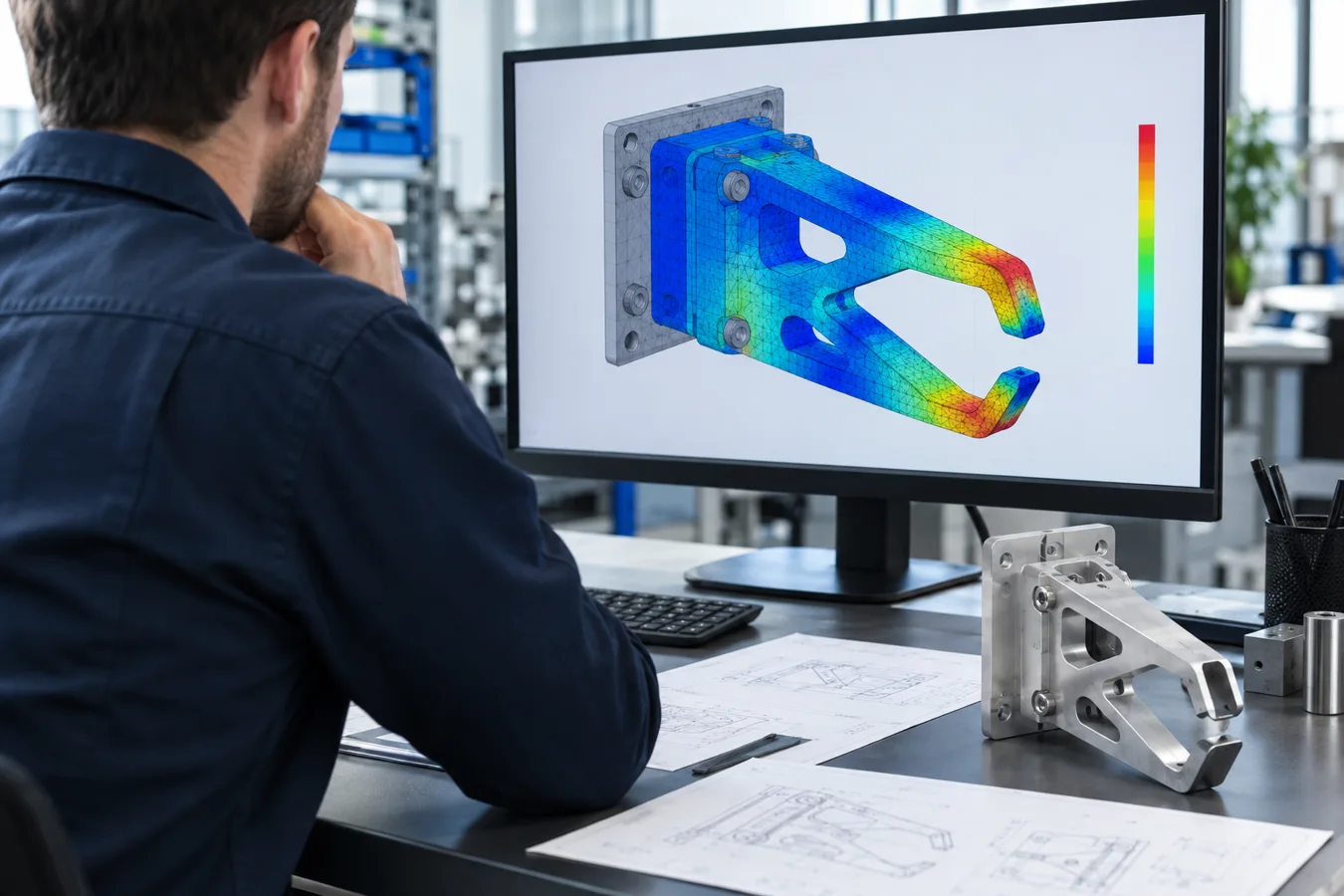
Structural FEA
Evaluate stress and displacement against defined materials, loads, supports, and acceptance criteria.

FEA · Robot simulation · Virtual commissioning
Check the load. Review the motion.
Test the sequence.
Engineering studies that turn project assumptions into documented findings for your next decision.
Discuss your studyChoose the engineering question
Each study has its own inputs, assumptions, and acceptance criteria. Combine studies when your project requires a broader view.
Evaluate stress and displacement against defined materials, loads, supports, and acceptance criteria.

Review reach, clearances, payload, center of gravity, inertia, and cycle time against the selected application.
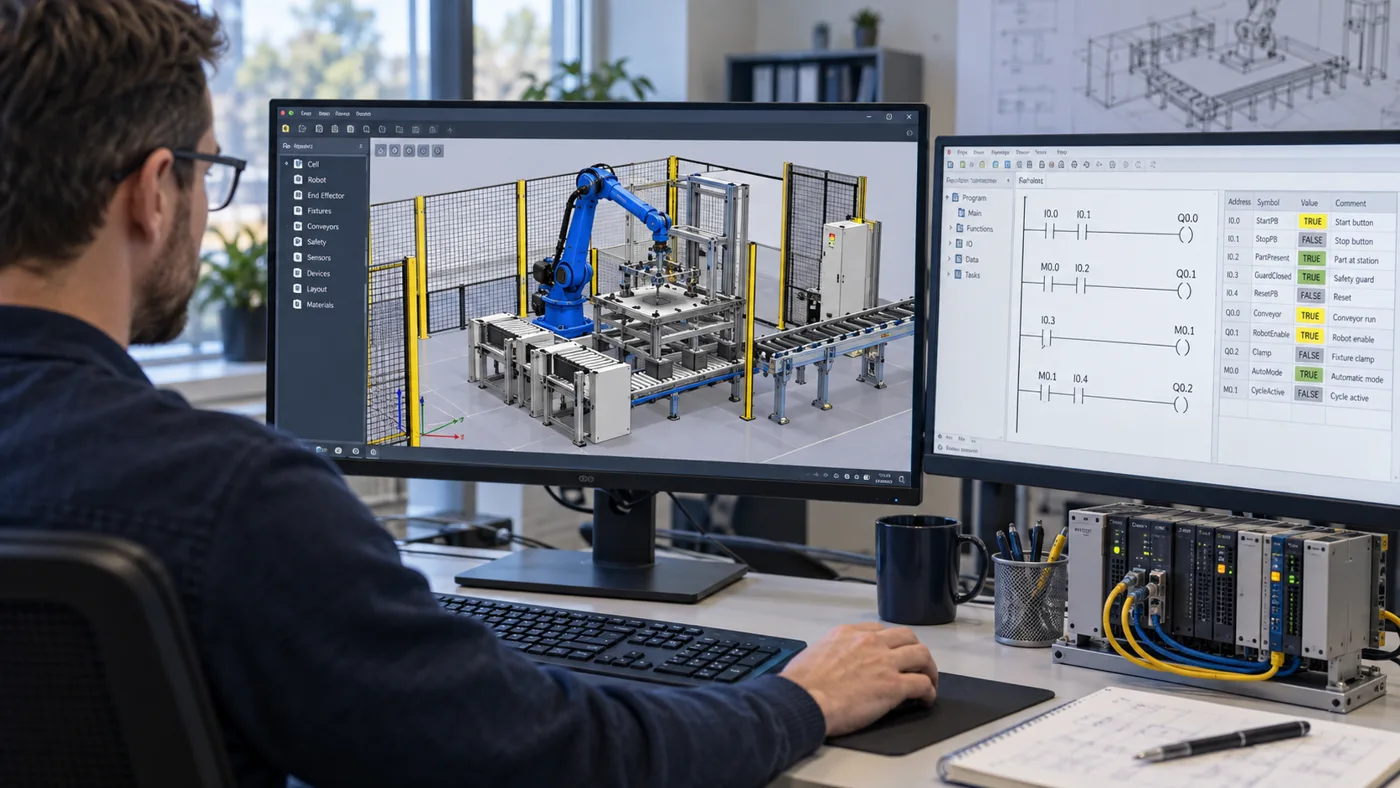
Use Emulate3D to test control sequences against a virtual model, with controller interfaces and scenarios agreed upfront.
Start with what must be proven
Define the question before defining the simulation.
Bring the CAD, material data, loads, and mounting conditions for a structural assessment.
Share the layout, robot model, tooling, component specifications, sequence, and production target.
Define operating modes, I/O behavior, interlocks, and fault recovery scenarios for virtual commissioning.
A clear starting point
Yes. We use SOLIDWORKS for structural FEA and Emulate3D for automation simulation and virtual commissioning. We confirm the suitable method and required model detail for each scope.
No. Tool and part mass, center of gravity, and moments of inertia all matter. We define the loading conditions and review them against available robot manufacturer limits.
Yes. Share the operating sequence, timing target, and specifications of the selected components. We scope the timing analysis and identify the assumptions that still require physical verification.
No. Simulation supports design decisions and controls testing within a defined model. Physical checks, safety validation, and commissioning must be planned separately.
Start with a conversation
Tell us about the component or cell, the decision you need to make, and your target date.